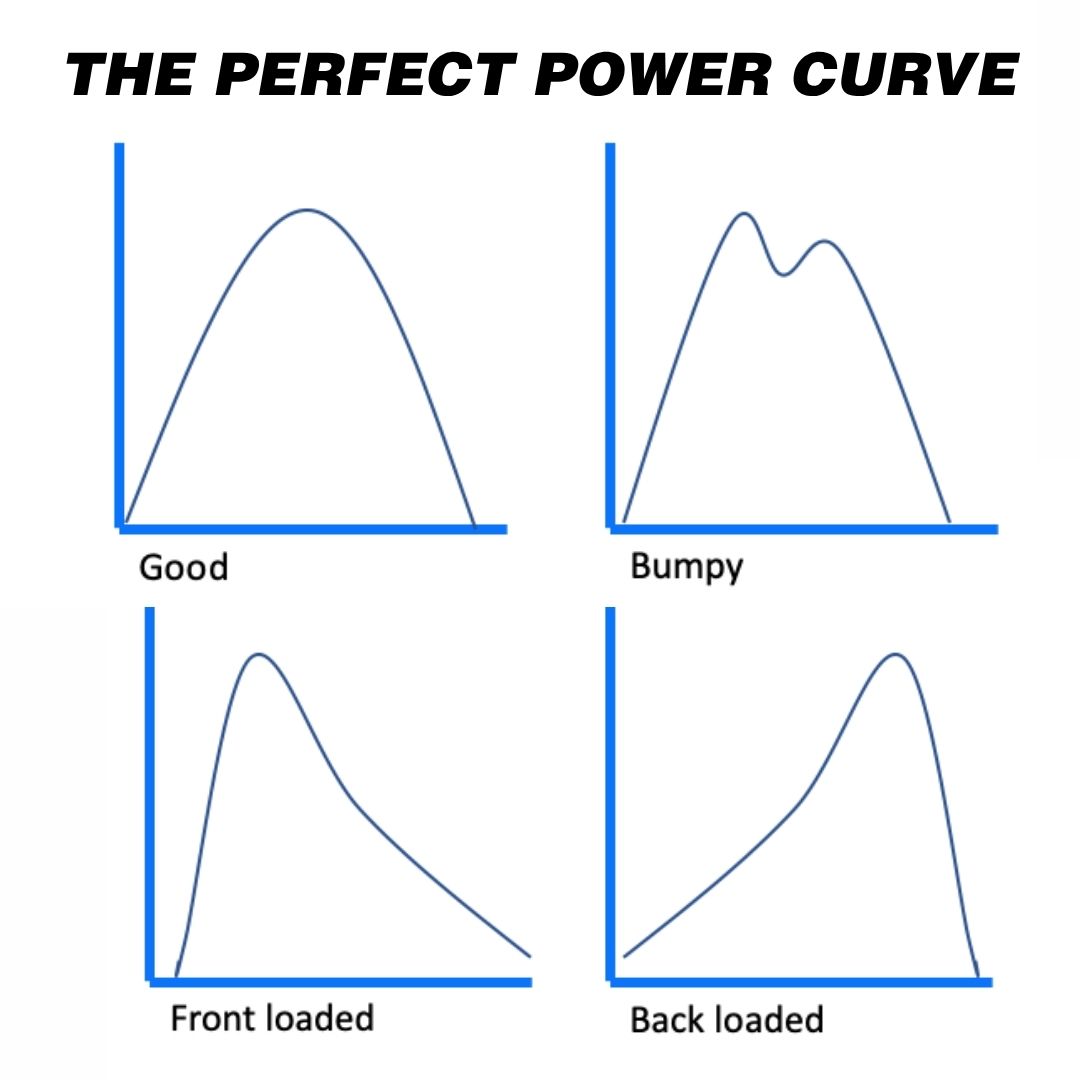
This is a quick blog about the rowing power (or force) curve, and what it tells you about how you’re applying power through the stroke. On the Concept2, you can actually see a version of this by pressing the display on the monitor. It won’t look exactly like the examples shown here, but it’s close enough to give you really useful feedback on what you’re doing well—and where things might be going wrong in your stroke.
Good
Power builds smoothly from the catch without being overly explosive. Force increases progressively, peaking through the middle of the stroke as the legs drive down, just before they flatten and the body begins to open. This shape reflects efficient sequencing and a strong connection.
Bumpy
Too much force is applied early at the catch, which cannot be sustained. This causes an initial spike, followed by a drop in power, and then a secondary surge toward the finish. It indicates inconsistent application of force and poor rhythm through the drive.
Front Loaded
Excessive force is generated right at the start—often from pushing hard with the legs while opening the body too early. This early peak cannot be sustained, leading to a significant loss of power through the middle and, especially, the finish of the stroke.
Back Loaded
Power is delayed due to a poor connection at the catch, often linked to limited mobility or weak positioning. The legs fail to engage effectively early, so power only builds later in the stroke, relying more on smaller muscle groups like the arms and core rather than the stronger leg drive.