
So, you guys may wonder why we are such sticklers when it comes to proper rowing technique. While many of you may suspect it’s simply because we like to hear ourselves talk, it is in fact because good technique is the foundation for high performance in rowing.
But you might ask, what relevance does this have for a casual rower like me? The answer is a lot – let me explain why.
Firstly, and most importantly, if you are rowing in class with incorrect technique, the physiological benefits won’t be as quick or achievable as opposed to if you are rowing with good technique. Poor rowing technique in class significantly reduces physiological benefits.
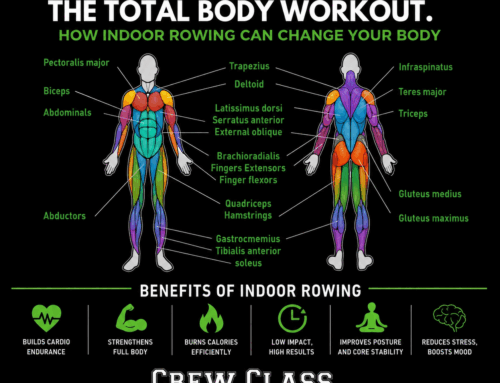
Effective indoor rowing is built on good form, which engages major muscle groups; your legs, core, back, shoulders and arms correctly. It is a full-body workout, which means technique is both important and easy to get wrong. Mistakes like early arm-pull or over-lean, stuff we tend to see a lot of in class, lead to inefficiency, meaning effort doesn’t translate to maximum power, speed, or sustained endurance. This slows progress toward fitness and strength targets. Proper technique ensures a full-body, smooth, and maximally effective workout, fast-tracking results by boosting muscle engagement and metabolic demand.
Essentially on the erg, perfect technique is all about smooth sequencing and a good power transfer. This is a mix of leg, body, and arm movements during the drive, followed by the reverse sequence for the recovery. Begin by pushing powerfully with the legs at the “catch,” then hinge back at the hips, and finally pull the handle into your body with the arms, importantly, all while engaging your core to connect your arms, back, and legs. For the recovery, swing the body forward, extend the arms, and then bend the knees to return to the start, emphasising staying relaxed throughout.
Flexibility and posture are key components. We need flexibility in our hamstrings, hips and shoulders to be relaxed coming into the catch and emphasise sitting up tall throughout the stroke. While you may not have ideal flexibility, or may be a little slouched in your core and shoulders at the start, consistent practice and reinforcing that perfect rowing stroke will build flexibility and improve posture. The hinge in our hips, the pull in our hamstrings and the relaxation in the shoulders will start to feel more and more natural, and you’ll start to see improvements in how you move, not just on the erg, but also day to day.
As well as increasing the physiological benefits, improving flexibility and posture, rowing with proper technique on the erg greatly reduces the risk of injury. If you are overloading a part of your body during the stroke, be that your lower back or your shoulder, a sustained period of doing this with incorrect technique can lead to injury over time.
My last point, for all you rowing nerds that are constantly looking for marginal gains 😉 Correct technique is the shortcut to higher performance and free speed. If you’re messing up the technique, like not keeping your core engaged, or not drawing the handle into your chest, you’re leaving performance gains on the table.
So word to the wise, listen to your coach the next time he pulls you up on a technical issue. It’s all in the name of making sure you’re able to fully achieve your full potential on the rowing machine.